In moments of conflict when the boys acted out during group activities, Shariffah responded with understanding and soon realised that they simply didn’t have the mobile phones required to participate. She lent them hers, because journeying with youth is about seeing them, not assessing them.
Each time, Shariffah found ways to respect their dignity, and over time, the boys saw Beyond not as a place that tried to fix them, but one where they belonged.
A Space to Belong, A Place to Grow
Initially, Beyond’s engagement with the boys centred around academic support, helping them stay on track in school. But it soon became clear that progress shouldn’t be measured only by schoolwork, but also by the development of stability and a sense of belonging in the community, which mattered just as much.
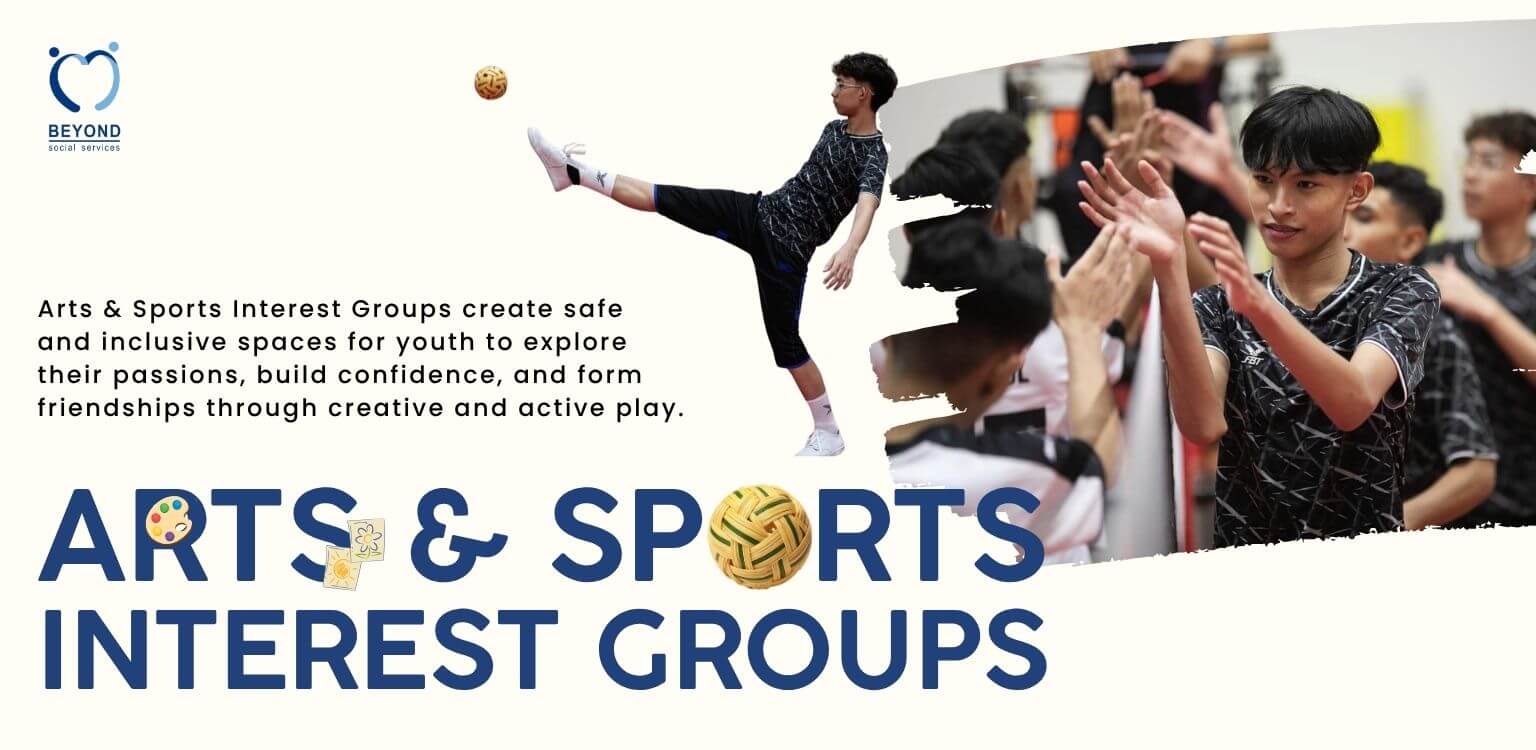
Though the boys struggled with formal learning, they kept turning up at the centre, drawn to the relationships, the belonging, the hope that something could be different. Over time, their interests shifted towards sports, first in soccer, and then in sepak takraw.
Through sepak takraw, the boys forged teamwork and pride. Despite having no formal coach, they organised their own training sessions, created ground rules, and built a team identity. They stayed out of vice activities not because they were told but because they held one another accountable.
For youths like Dani, 16, sepak takraw has been more than a sport — it was a turning point in his life. Shariffah partnered with his school to build a plan around his sports training, a once disconnected youth was transformed into a young person imbued with a growing confidence in himself and in the community. Today, Dani is a well-known player at takraw meets, recognised not for his past troubles, but for his skills and dedication.
Sports were never just about winning matches. They became a way to rebuild what was lost: dignity, community, belief.
Passing It Forward — Growing a Community of Care
Today, many of the older boys have taken on the role of mentors. They are models of emotional regulation during competitions, they resolve conflicts among younger teammates, and quietly show what it means to lead with patience and respect.
It isn’t perfect and it was never meant to be. Some youths face ongoing challenges, but they now have a community of peers who understand that mistakes are part of growth, and who choose, again and again, to pull each other back to solid ground.
The spirit of community development is also blooming in unexpected ways. Hidayah, a mother who witnessed how Beyond journeyed with her own son’s peers, stepped forward on her own to support the youths — creating spaces for conversations about respect and what it means to be a decent human being.
Six years on, from mischievous boys to young leaders, the journey continues. The foundation they are building today — one rooted in relationships, vulnerability, and care — is a testament to what happens when we believe not just in programmes, but in people.