
Written by Wilson, Community Worker
Qistina is a quiet, earnest 13-year-old who comes every week to our academic support programme for secondary school students. From the start, it was clear she struggled with mathematics. Like many of her peers, she found comfort in languages but stumbled when it came to numbers.
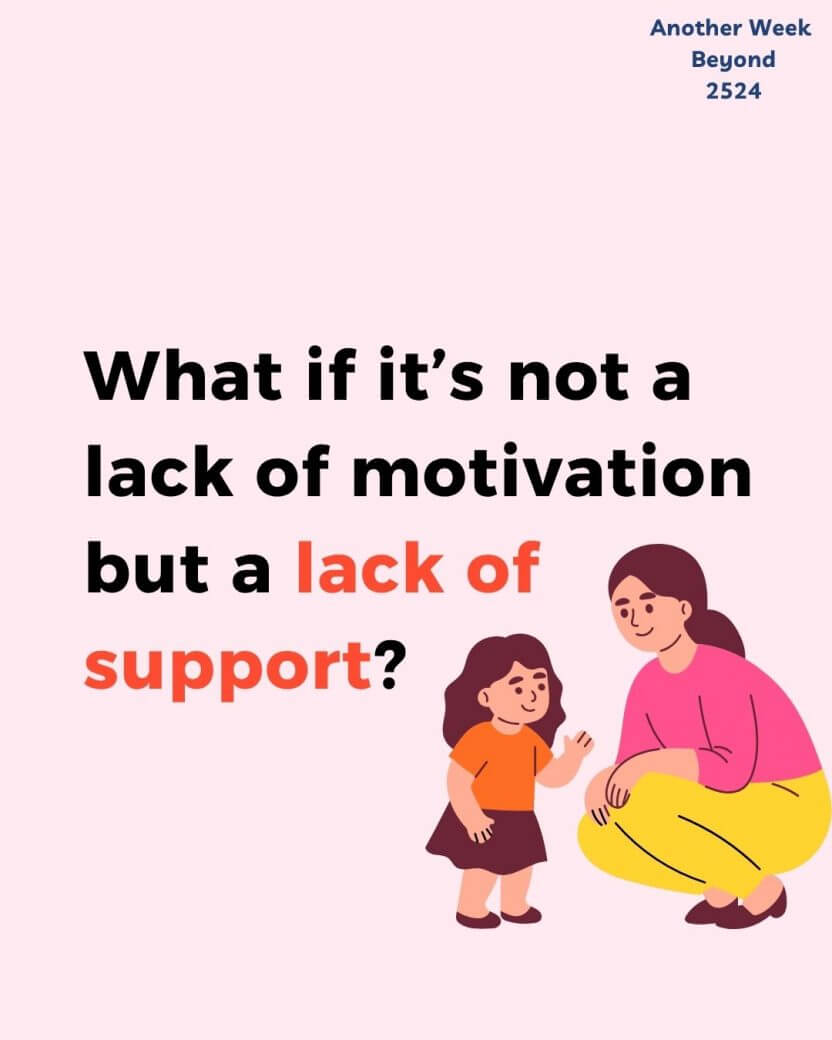
When we first started the programme in March, Qistina was the only one who showed up consistently. Still, after the first session, one volunteer shared that she found Qistina unmotivated to learn. I asked gently, “Then how come she’s the only one who keeps coming back?” The volunteer paused, and I could see her processing that perhaps it wasn’t a lack of interest at all.
At the next session, she came ready to try something different. She started slower, revisiting foundational concepts that Qistina might have missed years ago. And that small shift opened a door. By the end of the session, Qistina didn’t want to leave. She stayed 15 minutes past closing, eager to work through more practice questions. She had finally grasped a concept that once seemed out of reach, and she wanted to savour it.
Later, the volunteer reflected that Qistina wasn’t unmotivated; she simply had gaps in her fundamentals. By taking the time to understand where she was, they found a way forward together.
Stories like Qistina’s are not rare in our community. Many children lose confidence early on in primary school, unable to keep up simply because they started with a gap in their preschool years. It’s why we’ve partnered with Learning Vessels, a social enterprise, to bring early intervention to our youngest learners. They train our volunteers to impart basic literacy and numeracy skills, closing these gaps before they widen.
As part of our Early Learning Programme, children undergo pre- and post-tests so we can tailor lessons precisely to their needs. Over 90% of them have shown significant improvements, not just in numbers or words, but in the confidence that lights up their faces when something finally clicks.
Interestingly, we’ve noticed through these assessments that many preschoolers actually begin with stronger numeracy than literacy. But as they move up in primary school, English becomes more entangled with how math is taught. Without firm language skills, their grasp of mathematics falters, even as their everyday use of English slowly catches up. It’s a quiet problem, one that easily goes unnoticed until it becomes a weight on a child’s self-esteem.
Still, we see how eager they are to learn, given the right environment. In our Homework Support sessions, board games are a favourite – especially Prime Climb, a colourful math game that involves addition, subtraction, multiplication, and division. Despite its arithmetic demands, the children are all in, proving it’s not ability that holds them back, but how learning reaches them.
At the heart of all this is a simple truth, beautifully put by clinical child psychologist Dr Ross Greene:
“Children do well if they can… if they can’t, we adults need to figure out what’s getting in the way, so we can help.”
If you’d like to be part of helping children rediscover their confidence and joy in learning – we’d love to have you join us. Whether it’s through our Early Learning Programme, academic support, or simply sharing a game with a child who needs a win, you’ll be helping to build a community where every young person gets the chance to thrive.